

Starting a poultry farm is exciting. There is something satisfying about seeing the first chicks arrive, watching them grow and eventually selling your first batch of birds or collecting eggs.
But there is another side of poultry farming that is easy to overlook: the numbers.
A farmer may have healthy birds, a good poultry house and a ready market, but still struggle to know whether the business is actually making money.
Why?
Because poultry farming involves many small expenses. Feed, chicks, labour, medication, transport, water, electricity and other costs can quickly add up.
Without a budget and proper records, it is easy to spend money without knowing exactly where it is going.
A poultry farm should be managed not only as a farm, but also as a business.
Start With a Budget Before Buying Chicks
One of the first questions a new poultry farmer should ask is:
“How much will this project really cost?”
The answer is more than the price of the chicks.
A proper poultry budget should consider both startup costs and ongoing operating costs.
Startup costs
These are expenses you may incur before or when establishing the poultry project.
They can include:
- Poultry house construction or renovation
- Feeders and drinkers
- Water facilities
- Brooding equipment
- Lighting and electrical installation
- Initial bedding materials
- Purchase of chicks
- Other farm equipment
The exact cost will depend on the size and type of poultry project.
A farmer starting with a small flock will obviously have different requirements from someone planning a large commercial operation.
Feed: The Cost You Should Watch Closely
Once the birds arrive, feed quickly becomes one of the most important recurring expenses.
A farmer may think:
“I only need to buy a few bags of feed.”
But as the birds grow, their feed requirements increase. When this is multiplied over several weeks and hundreds or thousands of birds, the total cost can become significant.
Your budget should therefore include:
- Type of feed required
- Expected quantity
- Current price
- Transportation costs
- Storage requirements
It is also important to avoid unnecessary feed wastage.
Feed that is spilled, poorly stored or exposed to moisture is money lost.
Water is another essential requirement that needs to be included in the budget.
Depending on the farm, you may need to budget for:
- Water source
- Storage tanks
- Pipes
- Drinkers
- Pumps
- Electricity or fuel where applicable
Equipment also requires attention.
Feeders, drinkers, brooders, lighting systems and other equipment may need to be purchased, replaced or repaired during the life of the project.
A farmer who budgets for these expenses from the beginning is less likely to be caught unprepared.
Labour Is a Real Farm Cost
It is common for farmers to focus on chicks and feed while forgetting the cost of labour.
Someone has to feed the birds, provide water, clean the poultry house, monitor the flock, keep records and handle other daily activities.
If you employ someone, their wages should be included in your farm budget.
Even when family members provide the labour, it is useful to recognise the value of that work when calculating the true cost of production.
This gives you a more realistic picture of what the business is actually costing.
Budget for Bird Health
Healthy birds are essential to a productive poultry enterprise.
Your budget should therefore make provision for appropriate animal-health costs, which may include:
- Vaccination programmes
- Veterinary consultations
- Appropriate treatments
- Biosecurity measures
- Disinfectants and cleaning materials
- Other health-related requirements
Farmers should work with qualified veterinary or animal-health professionals to establish appropriate health programmes for their particular poultry operation.
It is also important not to wait until there is a serious problem before thinking about poultry health.
Prevention and good management should be part of the plan from the beginning.
Transport and Other “Small” Costs Can Become Big Costs
Have you ever looked at your expenses at the end of the month and wondered:
“Where did all that money go?”
This can happen on a poultry farm too.
Transport to purchase chicks, collect feed, deliver products or visit suppliers may seem like small expenses individually. But repeated trips can add up.
Other expenses may include:
- Electricity
- Water
- Repairs
- Cleaning materials
- Communication
- Packaging
- Market-related expenses
- Equipment replacement
These costs should not be ignored simply because they are smaller than the cost of feed or construction.
Keep Records From Day One
A budget tells you what you expect to spend.
Farm records tell you what you actually spent.
That difference is important.
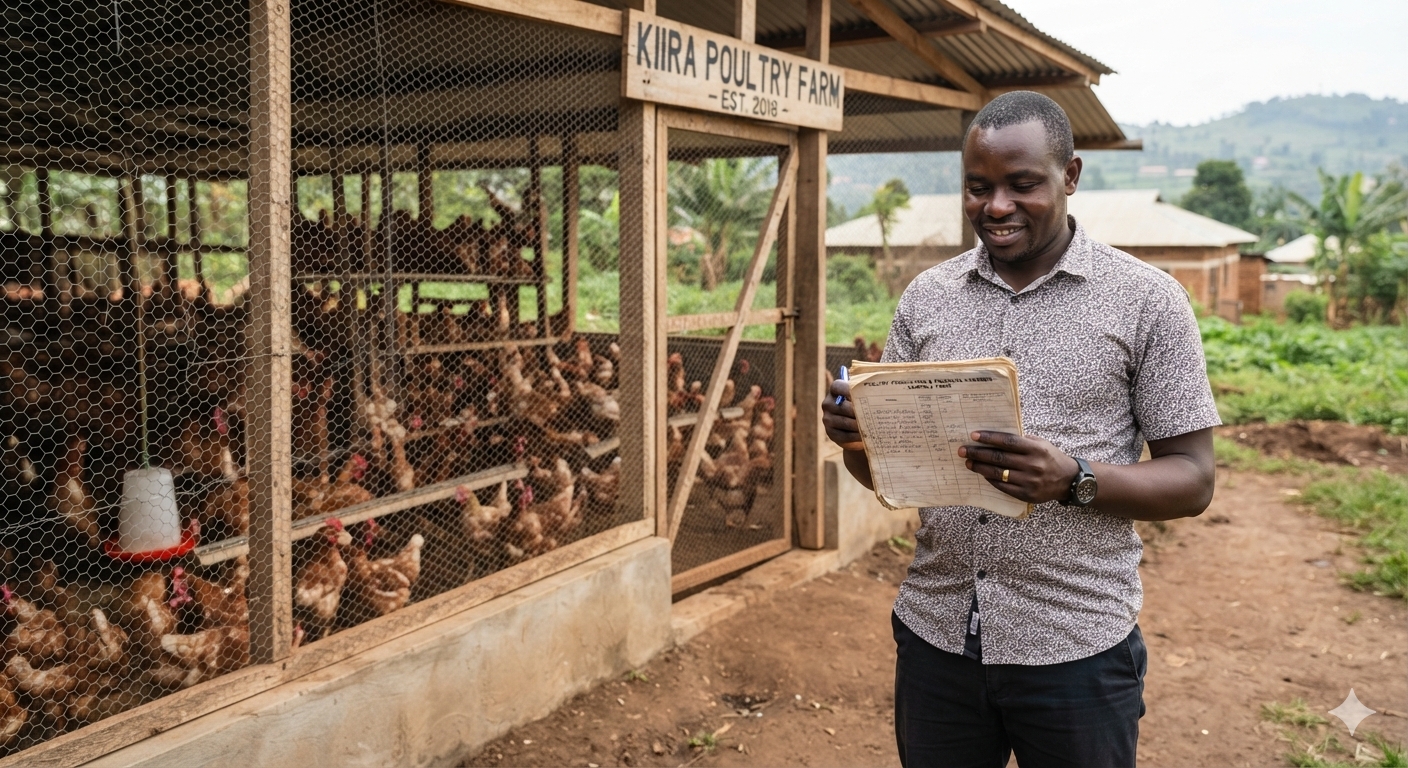
From the first day of the poultry project, keep simple and consistent records.
You don’t need complicated accounting software to begin. A notebook, spreadsheet or properly organised digital record can be enough for a small farm.
The important thing is consistency.
What Should a Poultry Farmer Record?
1. Number of Birds
Record the number of birds you start with and update the figure when there are changes.
For example:
Day 1: 500 chicks
Week 2: 490 birds
Week 4: 485 birds
This helps you monitor flock changes and identify unusual losses early.
2. Feed Purchased and Used
Record every purchase of feed.
For example:
| Date | Feed | Quantity | Cost |
|---|---|---|---|
| 5 Sept | Starter feed | 5 bags | UGX 250000 |
| 20 Sept | Grower feed | 8 bags | UGX 800000 |
You can then compare feed use with the number and age of birds.
Over time, these records can help you identify unusual consumption or unnecessary wastage.
3. Mortality
Bird losses should be recorded rather than simply forgotten.
Record:
- Date
- Number of birds lost
- Possible reason, if known
- Action taken
If mortality suddenly increases, your records can help you and your animal-health professional understand when the problem started.
4. Vaccinations and Treatments
Keep a record of health-related activities.
Include:
- Date
- Vaccination or treatment
- Number of birds involved
- Product used, where appropriate
- Advice received from the animal-health professional
Good records also help you remember when important health activities were carried out.
5. Labour Costs
Record payments made to farm workers and other labour-related expenses.
If you use casual workers for activities such as cleaning, repairs or loading birds, record those costs too.
At the end of the production cycle, you will have a better understanding of how much labour contributed to the cost of production.
6. Sales
This is where your records begin to tell the other side of the story.
Record:
- Date of sale
- Number of birds or quantity sold
- Selling price
- Total sales
- Customer or market, where useful
For egg production, farmers can also record daily or weekly egg collection and sales.
Without sales records, it becomes difficult to determine whether the poultry enterprise is generating a profit.
7. Other Expenses
Don’t leave out the smaller expenses.
Record things such as:
- Transport
- Electricity
- Water
- Repairs
- Cleaning materials
- Packaging
- Communication
- Equipment replacement
When these costs are recorded consistently, you get a much clearer picture of the entire business.
Your Records Should Answer One Important Question
At the end of a production cycle, you should be able to look at your records and ask:
“How much did I spend, how much did I earn and what did I learn?”
For example, imagine a farmer started with 500 birds.
At the end of the cycle, the farmer should be able to determine:
Total costs:
Chicks + feed + labour + health + transport + other expenses
Total income:
Birds or eggs sold
Business result:
Income minus costs
This simple comparison can reveal whether the enterprise is performing as expected.
Records Are More Than Numbers
Good records can also help a farmer make better decisions for the next production cycle.
Suppose your records show that feed costs were much higher than expected.
Instead of simply saying, “Poultry farming is expensive,” you can investigate further.
Was there excessive feed wastage?
Did feed prices increase?
Were birds consuming more than expected?
Was the flock size larger than originally planned?
Similarly, if sales were lower than expected, your records can help you investigate whether the problem was related to production, mortality, market prices or timing.
The records give you something to learn from.
A Simple Habit That Can Make a Difference
You don’t have to spend hours every evening doing complicated calculations.
Set aside a few minutes each day or week to record what happened on the farm.
A simple notebook could have four sections:
🐔 Flock
Number of birds, mortality and general observations.
🌾 Feed
Feed purchased, quantity used and cost.
💰 Money
Expenses and sales.
💉 Health
Vaccinations, treatments and veterinary advice.
At the end of every week, review the records.
This simple habit can prevent small problems from becoming invisible costs.
Before You Start Your Poultry Project
Before purchasing your first chicks, take a moment to write down:
1. How many birds will I keep?
2. How much will the poultry house cost?
3. How much will the chicks cost?
4. How much feed will I need?
5. How will I provide water?
6. What will labour cost?
7. What health and biosecurity expenses should I plan for?
8. How will I transport inputs and products?
9. Who will buy my birds or eggs?
10. How much money will I need to keep the project running until sales begin?
These questions may look simple, but answering them before you start can help you avoid unpleasant financial surprises later.
Final Thoughts
A poultry farmer does not need to be an accountant to manage farm finances well.
What matters is developing the habit of planning before spending and recording after spending.
A budget helps you prepare for the costs ahead. Good records help you understand what actually happened on the farm.
Together, they can help you:
- Control unnecessary expenses
- Monitor production
- Understand your true costs
- Track sales
- Identify problems early
- Make better decisions
- Plan your next production cycle
In poultry farming, healthy birds are important—but healthy financial records matter too.
Planning to Start or Improve a Poultry Farm?
Rincken Agric Solutions Ltd. provides practical agricultural solutions, including poultry farming and farm management services.
If you are planning a poultry project and would like professional guidance, tell us about your project.
Leave a Reply